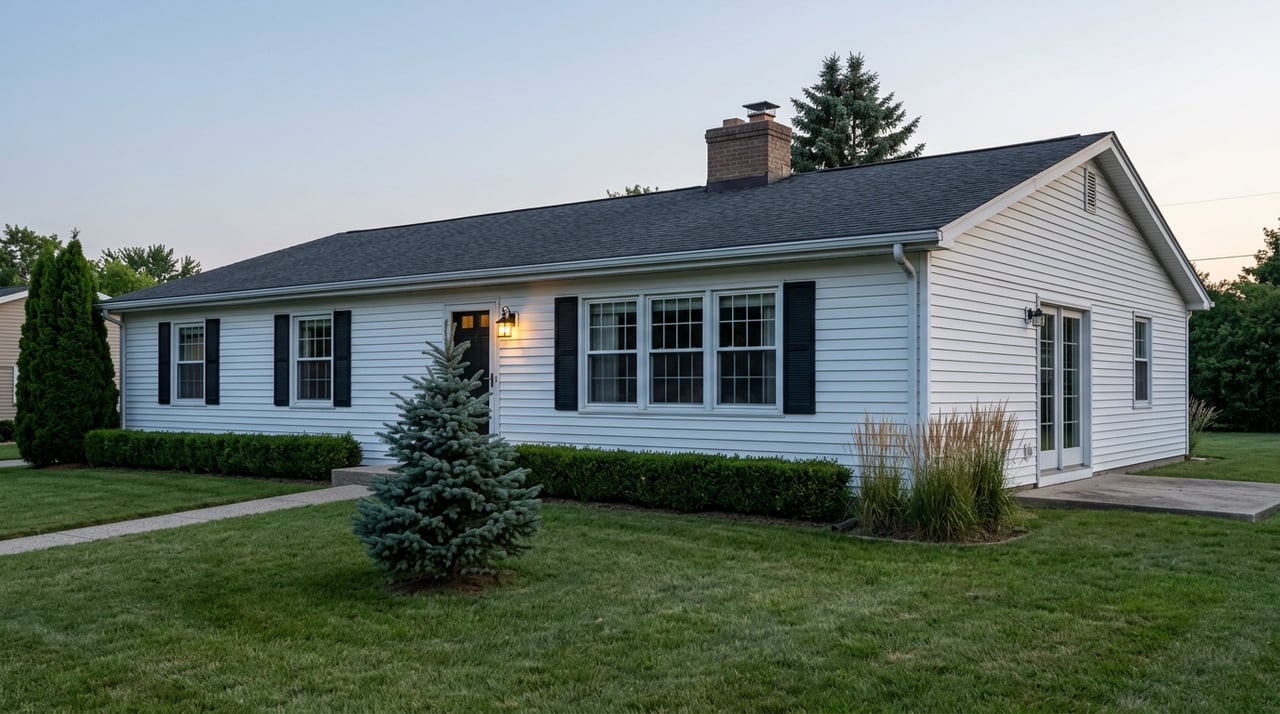
Portage's Sewer Rate Just Went Up. The Reason Sits in Kalamazoo.
September 10, 2026
September 10, 2026
If you're comparing Portage to Kalamazoo on price alone, you're already missing the number that follows you home. Portage's water and sewer rates jumped this summer, and the increase on the sewer side wasn't really a Portage decision. It traces back to what a neighboring city charges to treat the water once it leaves your house. Layer on a billing rule that quietly locks in part of your summer sewer bill based on what the previous owner did with a garden hose one January, months before you ever saw the listing, and the "cost of owning in Portage" stops being a number you can read off a closing statement. It's a number two other parties are still writing.
Here's the part that surprises most buyers: the City of Portage doesn't operate its own sewage treatment plant. Wastewater from Portage homes travels to the Kalamazoo Water Reclamation Plant, which treats wastewater for more than 150,000 people across nearly 20 jurisdictions in the region. Portage is a customer of that system, not the operator of it. Day-to-day water and sewer operations in Portage are also run under contract by Veolia, the private utility firm listed on the city's own utilities page as the point of contact for water main breaks and sewer emergencies.
That structure matters because it means a chunk of what shows up on a Portage water bill is set by decisions made somewhere else. When Kalamazoo's treatment costs go up, Portage's sewer rate follows, whether or not anything changed inside Portage city limits.
That's exactly what happened this year.
Portage City Council approved a new water and sewer rate schedule for fiscal year 2026-27, effective July 1, 2026. The increases hit the sewer side harder than the water side, and the city's own reporting on the vote pointed to a specific cause: rising sewer treatment charges billed by the City of Kalamazoo, on top of ordinary inflation and capital improvement needs.
| Charge | FY2025-26 | FY2026-27 | Change |
|---|---|---|---|
| Water meter base fee (5/8", quarterly) | $26.22 | $27.53 | ~5.0% |
| Sewer meter base fee (5/8", quarterly) | $38.56 | $41.26 | 8.44% |
| Water commodity rate (per 1,000 gal) | $3.82 | $4.01 | ~5.0% |
| Sewer commodity rate (per 1,000 gal) | $7.03 | $7.66 | ~9.0% |
The pattern is worth sitting with. The water-side increases sit around 5 percent, and according to WWMT's coverage of the council vote, city officials pointed to a mature water system and a low percentage of new customers connecting to it as pressure that will keep pushing that rate upward in future cycles too. The sewer-side increases run close to double that, and the same reporting names Kalamazoo's treatment charges as a driver of this specific hike. Two different problems, two different rates of increase, and only one of them is something Portage controls.
For a buyer running the math on monthly carrying costs, that distinction matters more than the headline percentage. A 5 percent water increase is a local infrastructure story. A near-9 percent sewer increase tied to a neighboring city's plant is a regional dependency that Portage residents can't vote on directly, and one that could move again the next time Kalamazoo's treatment costs shift.
The second mechanism is stranger, and it's the one nobody puts in a listing description.
Portage caps how much of your summer sewer bill gets charged at the volumetric rate. The logic makes sense on paper: a lot of summer water use goes to lawns and gardens, never touches the sanitary sewer, and shouldn't be billed as if it did. So the city gives every residential account a "sprinkling allowance," and that allowance is based on the property's own winter-quarter water use, meaning the billing cycle that includes January, according to the city's own explanation of how bills work.
Here's the part that catches buyers off guard. If a customer has no winter-quarter consumption on record, the city defaults the cap to a flat 15,000 gallons. Full stop. It doesn't matter if the incoming household is one person or a family of six.
Walk through what that means in practice:
A house that sat vacant over the winter, a new-construction home with no prior meter history, or a property where the seller wintered somewhere warmer will show up at closing with no real winter-quarter reading on file. The new owner inherits that flat 15,000-gallon default, whatever their actual household size and water habits turn out to be.
A house where the previous owner was a light water user in January, maybe a retiree with a smaller household or someone who traveled that winter, locks in a lower cap. That's the version that quietly costs a new owner more, because more of their summer sprinkler and garden use ends up billed at the full sewer commodity rate instead of being excluded as outdoor water.
Either way, the number that decides part of your summer water bill was set by someone else's January, not your household's actual usage pattern.
None of this shows up in a sale price. It shows up three or four months after you move in, when the first summer bill arrives and doesn't match what the seller's disclosures implied.
This is the kind of detail that separates a buyer comparing Portage to Kalamazoo on tax bills alone from one who actually understands what carrying a Portage address costs. A comparison that stops at property taxes and skips the utility structure is only telling half the story, and the sewer side of that structure is currently rising faster than the water side, for reasons that live outside Portage's own budget process.
Before writing an offer on a Portage home, a few questions are worth asking directly:
Median price gets all the attention because it's the easiest number to find. But the recurring costs that actually shape what it feels like to own a home in a specific place are usually set somewhere the price tag never mentions, whether that's a neighboring city's treatment plant or a stranger's water habits the January before you moved in. Portage isn't unusual for having these mechanisms. It's unusual for how well-documented they are, if you know where to look.
If you're weighing Portage against Kalamazoo, Oshtemo, or another Southwest Michigan community and want someone to walk through what a specific address actually costs to carry, month to month, not just what it costs to buy, Atwood Properties Group has spent nearly two decades working these exact comparisons for local buyers. If you're on the selling side of that same equation, our team can also get you a straight, no-pressure home valuation before you decide what's next. Either way, reach out before you write an offer, not after the first summer water bill lands.
Stay up to date on the latest real estate trends.
Partner with Atwood Properties Group for expert guidance in buying, selling, renting, or investing. Honest advice, seamless service, and local expertise you can trust every step.