Splitting Acreage in Paw Paw Just Got Easier on Paper. Your Well Still Has a Vote.
August 20, 2026
August 20, 2026
If you own ten acres in Van Buren County and you've heard that Michigan just made it easier to divide land, you heard right. What you probably haven't heard is the sentence the county tucked right after the good news, the one that quietly determines whether any of those new lots will actually hold a house.
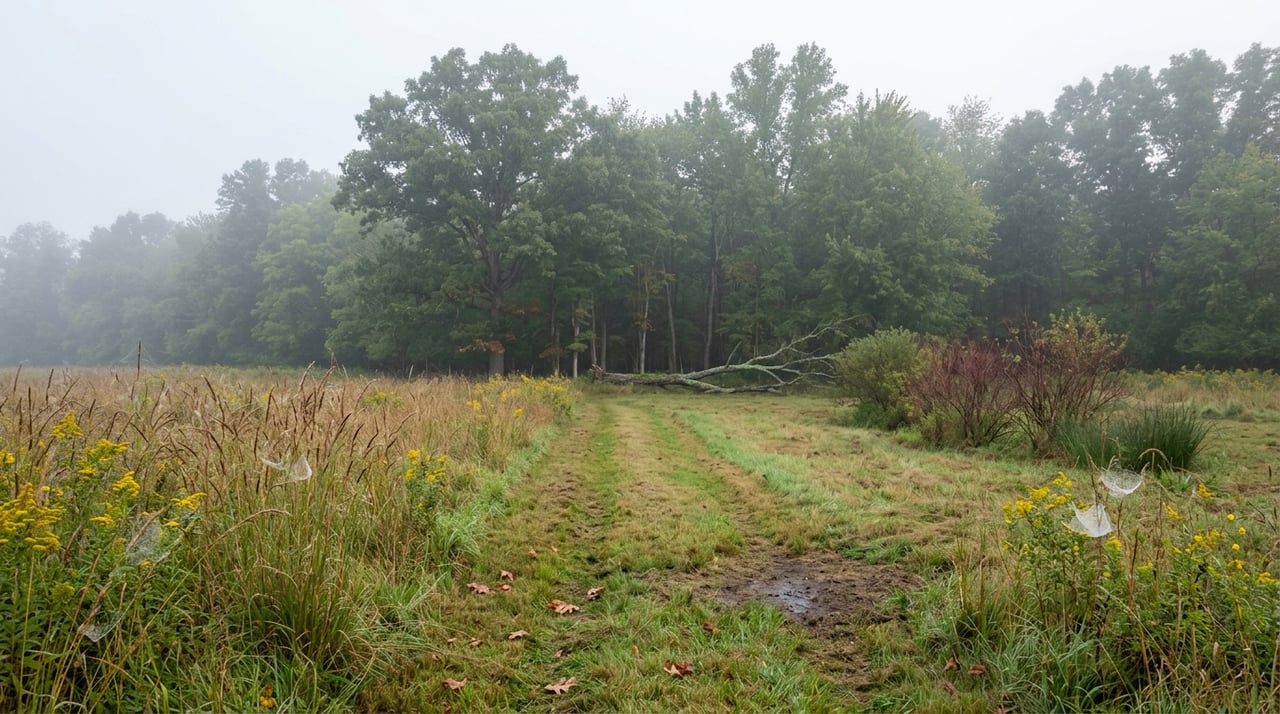
Michigan's Public Act 58 of 2025, originally Senate Bill 23, took effect March 24, 2026. It rewrites the state's default land division formula. Under the old rule, the first ten acres of a parent parcel could generally be split into a maximum of four distinct parcels. Under the new default, that same ten acres can become up to ten parcels. That's not a modest adjustment. It's a shift from four building sites to a possible ten on the same ground, and it's exactly the kind of change that gets discussed at kitchen tables across Paw Paw Township and Antwerp Township this year, because so much of what Atwood Properties Group sells and manages out here is acreage, not subdivisions.
Here's the comparison, spelled out:
| Old Default (pre-March 2026) | New Default (Public Act 58) | |
|---|---|---|
| Max parcels from first 10 acres | 4 | 10 |
| Process for small splits | Often required costly platting | Simplified, less platting required |
| Statewide rollout | N/A | Phased; townships choose early opt-in or wait for 2027 default |
That table is the part of the story most people stop reading at. It's also the part that tells you the least about whether your land actually works.
Van Buren County published its own explainer on the new law in late February, aimed squarely at landowners and real estate professionals. It's a genuinely useful document, and it doesn't oversell the change. Right alongside the parcel math, the county includes a warning that matters more than the headline number:
"While the new law provides density, it does not guarantee water and sewer access."
That's the whole story in one sentence. Public Act 58 changes what your township's zoning math will allow. It does nothing to change what your soil, your water table, or your septic setbacks will allow. Those are two entirely different gatekeepers, and out here, the second one has always been the stricter of the two.
The county goes further, noting that as density increases from four homes to ten homes on a ten-acre site, the strain on local roads and, more specifically, on private septic systems and wells becomes an immediate planning concern. That's not boilerplate caution. It's the county telling landowners, in plain language, that more paper lots do not automatically mean more buildable lots.
For a Paw Paw parcel, the entity with real authority over whether a piece of raw land can support a house is not the township assessor and it's not the state legislature. It's the Van Buren/Cass District Health Department, based at 260 South Street in Lawrence. Their environmental health division conducts well inspections and permits septic system installations for the county, and they're the office a buyer or landowner needs to contact for a soil and site evaluation on any vacant parcel, to find out whether it can actually support an on-site well and septic system before anyone assumes it can.
This matters because the setbacks that govern septic placement in Michigan are not small. Statewide guidance generally calls for something in the range of 50 to 100 feet between septic components and wells, 25 to 50 feet from property lines, and 50 to 75 feet from surface water. Run that math against a freshly split one-acre lot carved out of a ten-acre parent parcel under the new rule, and you can see the problem quickly. A lot that's legal on the zoning map can still be too tight, once you account for where the well has to sit relative to the drain field, and where both have to sit relative to the neighbor's property line.
Permit timelines add another layer buyers underestimate. Soil evaluations and design review can move in as little as a week in smaller counties or stretch three to four weeks in higher-volume ones, and total permit costs, covering application, soil evaluation, design review, and construction inspection, typically run $200 to $800 depending on system complexity. None of that is expensive in isolation. All of it becomes a real cost and a real delay when you're trying to close on a lot that turns out to need an engineered system instead of a standard one, because the soil test came back with a high water table or a clay layer nobody accounted for at the offer stage.
Here's the part that trips up buyers who read one article and assume it's settled everywhere. Public Act 58 sets a statewide default, but individual cities, villages, and townships get to decide whether they adopt an early opt-in ordinance now or wait for that default to phase in automatically in 2027. That means the actual division limit on a given parcel in Paw Paw Township could differ from the limit on a parcel a few miles away in Antwerp Township or Waverly Township, depending on what each board has already passed.
Antwerp Township's own land division page offers a piece of advice worth repeating to anyone chasing this new density: applicants are strongly encouraged to speak with the Township Zoning Administrator before hiring a surveyor. That's a sequencing tip, not a formality. An iron-set survey by a licensed Michigan surveyor is a real expense, and paying for one before confirming the split is even allowed under your specific township's current ordinance is how buyers and sellers lose money on land deals that never should have gotten that far. The same township page notes that a land division approval, once granted, expires after one year unless the paperwork is recorded with the Van Buren County Register of Deeds, and that any new public road created by a split has to be approved by the Van Buren County Road Commission, while private roads or shared driveways go through the township instead.
None of this makes Paw Paw acreage a bad buy. It means the math on a raw parcel is less about what the state now allows and more about what the specific soil, the specific setbacks, and the specific township ordinance will allow on that specific piece of ground. Current asking prices for land near Paw Paw run close to $26,700 per acre on average, with typical listings sitting well into the mid six figures for larger tracts. That number only tells you what sellers are asking. It says nothing about how many of those acres can actually carry a septic field once you subtract the buffer zones around the well, the property lines, and any creek or drain running through the parcel.
For an investor thinking about buying ten acres and quietly assuming they can eventually carve it into ten lots, the honest sequence looks like this:
That's not a checklist that shows up in a press release about a new state law. It's the version that actually determines whether a Paw Paw land deal closes on schedule.
Does the new default apply automatically to every property in Paw Paw right now? Only where the local township has already adopted an early opt-in ordinance. Otherwise, the statewide default phases in in 2027, so it's worth confirming directly with the township zoning office before assuming the new parcel limits apply to a specific piece of land today.
If I already have a well and septic on my property, does splitting off a new lot affect them? It can. Any new parcel created nearby still has to meet the same separation distances from your existing well and drain field, which can limit exactly where a new lot's building envelope is allowed to sit.
Do I need a survey before I contact the health department? No. Getting the soil and site evaluation done first is generally the cheaper and faster order of operations, since it tells you whether the split is worth surveying for at all.
Land questions like these are exactly where a local, hands-on team earns its keep, whether you're weighing a raw parcel, an existing acreage listing, or a portfolio of both across Van Buren County. If you're sizing up a Paw Paw property and want a straight answer on what it's actually worth and what it can actually support, reach out to Atwood Properties Group or start with a free instant home valuation to see where your land stands today.
Stay up to date on the latest real estate trends.
Partner with Atwood Properties Group for expert guidance in buying, selling, renting, or investing. Honest advice, seamless service, and local expertise you can trust every step.