What Kalamazoo Home Inspections Actually Flag, And What You Have To Disclose Anyway
July 23, 2026
July 23, 2026
Most pre-list advice tells sellers to fix the cosmetic stuff and hope the inspection is quiet. That works in a slow market. Kalamazoo is not a slow market. In March 2026, Kalamazoo County home prices were up 12.4% compared to last year, selling for a median price of $296K, and homes were selling after 22 days on the market compared to 27 days a year earlier. When homes move that quickly, buyers stop caring about paint color and start caring about the three or four inspection findings that can void their financing or blow up their insurance quote.
Those findings are also, not coincidentally, the ones Michigan's Seller Disclosure Act will force you to talk about before the purchase agreement is signed. So the real seller strategy in Kalamazoo isn't hiding them. It's getting ahead of them.
Local inspectors will note dozens of items on an average Kalamazoo house. Kalamazoo offers a wide mix of home styles and ages, from 100-year-old character homes to newly built subdivisions, and certified inspectors know the issues that commonly affect homes in the region including insulation problems, foundation movement, ventilation deficiencies, moisture intrusion, and aging mechanical systems. Only three categories, in our experience, consistently reopen price negotiations after the inspection:
Everything else tends to be a credit or a punch list. These three tend to be a renegotiation.
The seller's edge in Kalamazoo isn't a clean inspection report. It's a disclosure statement that already tells the buyer what they were about to find, paired with a listing price that reflects it.
If you have never sold a home in Kalamazoo County, this is the number you did not expect. Kalamazoo County is considered a Zone 1 County, which means that average radon levels are expected to be above the EPA's recommended action level of 4.0 pCi/L. The local inspection industry sees the same pattern in the field. HomeSpec, a Kalamazoo and Battle Creek inspector, reports that up to 40% of radon tests on homes in the greater Kalamazoo area come back over the recommended radon levels.
Buyers coming from lower-radon markets, and their agents, increasingly write radon testing into the inspection contingency by default. If your test comes back hot, the fix is not cheap but it is knowable. Radon mitigation in Kalamazoo typically costs between $800 and $2,000, and most homes with standard basements can be mitigated with a sub-slab depressurization system in the $1,000–$1,500 range.
The pre-list play is simple. Short-term radon testing kits are available for purchase year-round at the Kalamazoo County Health & Community Services Department at 311 E. Alcott St. in Kalamazoo for $10. Test before you list. If the result is elevated, mitigate before photos, and put the paid mitigation contractor invoice in the disclosure packet. A buyer looking at a documented sub-slab system reacts very differently from a buyer looking at a first-time 6.8 pCi/L result during their own inspection window.
The Michigan Seller Disclosure Statement asks a plain question about basement and crawl space water. It has caught more Kalamazoo sellers than any other single line on the form.
Each item has three checkboxes: "yes" (there's a known issue), "no" (no known issue), and "unknown." The most common dispute area is basement water. Sellers who've had even one water event must check "yes" and explain, and painting over water stains before listing does not change the disclosure obligation.
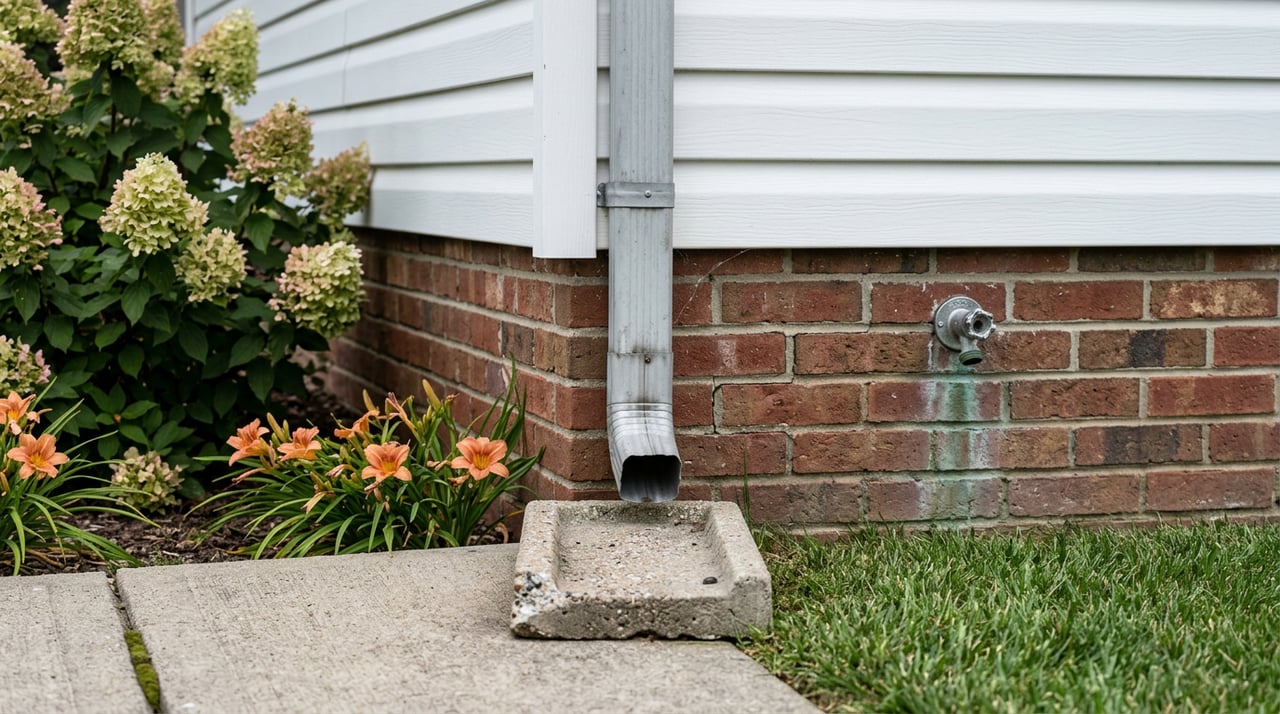
Kalamazoo's older housing stock, especially in the near-downtown neighborhoods where the Vine neighborhood posted a $163K median price over the three months ending May 2026 with homes selling after 15 days on the market, was built with fieldstone or block foundations that were never designed to be dry basements. A single seep during the March thaw counts. A sump pump that ran twice last spring counts. Michigan courts have been consistent about what happens when a seller decides it does not count.
The Seller Disclosure Act covers everything from roof leaks and basement water to environmental hazards and pending litigation, and deliberately hiding known defects can lead to fraud claims long after closing. The safer move, legally and strategically, is to check yes, describe the event in one sentence, and note the remediation. The Michigan Court of Appeals held in Roberts v. Saffell that innocent misrepresentation is not a viable theory under the Seller Disclosure Act, so the disclosure form protects sellers who are honest about what they know, and marking an item "unknown" when you genuinely don't know the answer is far safer than guessing.
A lot of Kalamazoo's charm sits on top of pre-WWII wiring. Inspectors are careful with the language they use. A screw-in fuse panel, an ungrounded electrical system, or galvanized plumbing pipes will get mentioned in the report, but are not on their own defects. They can be unsafe.
That distinction matters because the buyer's homeowner's insurance carrier does not read reports the way inspectors write them. A screw-in fuse panel or knob-and-tube wiring frequently triggers a "replace to bind coverage" condition from the underwriter. That condition can turn into a financing delay, which can turn into a price concession. Galvanized supply lines behave the same way with FHA-influenced appraisers.
If your Kalamazoo home has any of the following, plan for the inspection conversation now, not the week the offer comes in:
None of these are automatic dealbreakers. All of them are automatic conversations.
The Michigan form is longer and more specific than sellers expect. Michigan law requires home sellers to complete a written disclosure statement before closing, and the Michigan Seller Disclosure Act (MCL 565.951–966) mandates a six-page form covering the property's known defects, environmental hazards, and mechanical systems.
The timing rule is the one sellers most often miss. The seller must provide the buyer with a completed Seller's Disclosure Statement before the purchase agreement is signed or within 72 hours after acceptance, and the buyer has the right to terminate the agreement within 72 hours of receiving the disclosure if new information changes their decision. If you hand over the disclosure late and it contains anything the buyer did not expect, you have given them a free option to walk.
Here is how the common Kalamazoo inspection findings map to the form:
| Inspection finding | Where it lands on the MI disclosure | Practical seller move |
|---|---|---|
| Elevated radon test | Environmental conditions | Test pre-list, mitigate, include invoice |
| Basement seepage, sump pump history | Basement/crawl space water question | Check yes, one-sentence explanation, keep receipts |
| Screw-in fuse panel, ungrounded wiring | Electrical system working order | Disclose age, note any partial rewires |
| Galvanized supply lines | Plumbing system | Disclose material, note water heater age |
| Pre-1978 build date | Triggers federal lead paint disclosure | Provide EPA pamphlet, Lead Warning Statement |
The lead paint layer is federal, not state. For homes built before 1978, the Residential Lead-Based Paint Hazard Reduction Act of 1992 requires sellers to give buyers the EPA's Protect Your Family From Lead in Your Home pamphlet, include a Lead Warning Statement in the sales contract, and allow buyers a 10-day period to conduct a lead-based paint inspection or risk assessment. A material share of homes inside the City of Kalamazoo are pre-1978. Build the 10-day window into your closing timeline from the start.
The order matters. Doing these out of sequence is how sellers end up mitigating radon twice or paying for repairs a buyer would have accepted as a credit.
Does an "as-is" listing get me out of the Michigan disclosure? No. In Michigan, most home sellers must complete a disclosure statement covering known property defects, and selling "as is" doesn't get you out of it.
How long can a Kalamazoo buyer come back at me after closing? The statute of limitations is 6 years from discovery, and success depends on proving the seller had actual knowledge — hidden patches over water stains, painted-over cracks, and neighbor testimony about known problems can all serve as evidence. Keep every invoice.
Are inherited or estate sales still on the hook? No. Exceptions include court-ordered sales, foreclosures, transfers between family members, and new construction.
Is a radon result from three years ago still usable for disclosure? Treat it as historical, not current. EPA recommends testing every 2 years, during alternate seasons, moving into a lower floor, after major home renovations, or when purchasing a new home.
If you are getting a Kalamazoo home ready to list this season and want a walk-through that flags these issues before the buyer's inspector does, Atwood Properties Group can sit at your kitchen table with the six-page form, a flashlight, and honest answers. Get your instant home valuation to start the conversation.
Stay up to date on the latest real estate trends.
Partner with Atwood Properties Group for expert guidance in buying, selling, renting, or investing. Honest advice, seamless service, and local expertise you can trust every step.