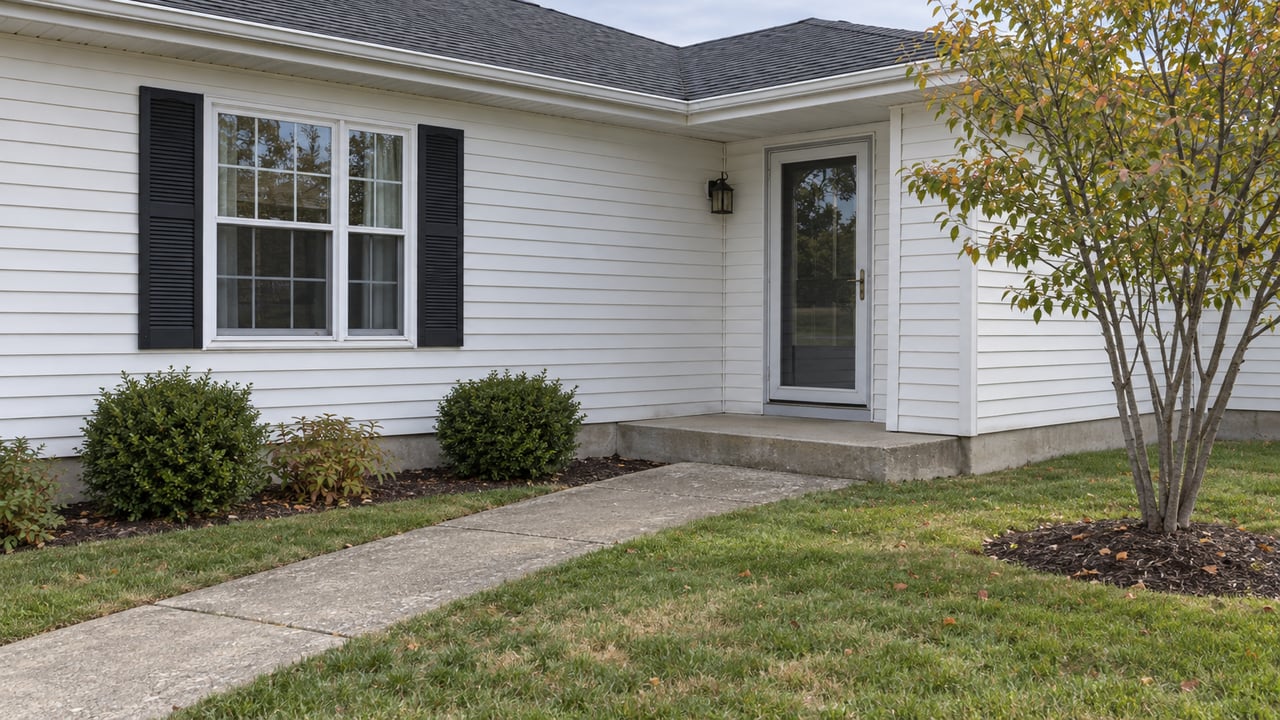
Oshtemo Township's Biggest New Neighborhood Needed $40 Million in Public Money to Get Built
October 1, 2026
October 1, 2026
Forty-eight acres of woods along West Main Street have been cleared for nearly a year now, sitting across from Advia Credit Union's headquarters between 9th Street and US-131. The number that explains what actually happens on that land arrived only three weeks ago, when Public Media Network reported that Kalamazoo County commissioners voted to let the developer keep up to $40 million in future property tax growth generated by the project itself. The county's own brownfield office was direct about why that money was necessary: without it, the housing math in Oshtemo Township does not close. As Win Country reported, the county's brownfield director told commissioners during committee review in mid-August that developers need incentive "to make the market rate development work."
That single fact reframes what's rising on this parcel. West Main Villages is being marketed, and will eventually be lived in, as new housing supply for a township that has been short on it. But the 444 homes now under construction exist because a specific financing tool made them pencil out, not because the free market alone would have delivered them at this scale. For anyone comparing Oshtemo Township to Kalamazoo, Portage, or Texas Township on the strength of "more inventory coming," it matters that this particular wave of inventory was engineered through public subsidy, on a timeline set by government approvals rather than by builder appetite alone.
The project is called West Main Villages, developed by West Main 1, LLC under Ferlito Group, a Detroit-based firm. It became the township's first project under the Mixed Use District zoning Oshtemo created in 2024, and the Planning Commission approved a concept plan in 2025: 336 apartment units for rent, spread across three-story buildings, plus 108 duplex units for sale, for a total of 444 homes. Roughly 50,000 square feet of commercial space, laid out as eleven one-story buildings, was planned to front West Main Street itself. Township planning documents even named the project's main internal road, calling it Provincial Drive, and laid out a shared amenity area called Central Park with a clubhouse, pool, pickleball courts, and walking paths for residents.
As Public Media Network reported, 66 of the 336 rental units will be income-restricted for 12 years to households earning up to 80 percent of the area median income. That detail matters because it's part of why the county was willing to extend the brownfield tool at all. Oshtemo's 2023 housing plan, prepared with the W.E. Upjohn Institute, put the township's 2030 housing need at 750 new units. This one project alone accounts for 444 of them. Township planning staff have said that if every other proposal in the pipeline materializes, Oshtemo could reach 840 units by 2030, and that the local market could absorb as many as 1,500 without units sitting empty. In other words, one 48-acre parcel is doing more work toward the township's housing target than any other single project on the books.
The taxable value of the land itself shows the scale of what's being built. County records put its current taxable value at $1.4 million. Once the project is complete, that figure is projected to exceed $70 million, which is the tax base growth the brownfield financing is designed to capture and return to the developer over 25 years to offset the $117 million total cost of the build.
For a few weeks in February 2026, the plan looked different. Ferlito Group returned to the Planning Commission with a revised layout that swapped several of the small retail buildings for a 99,000-square-foot Kroger Marketplace and a fueling station. The apartment building count dropped from ten to eight, the 54 planned duplex buildings became 77 single-family homes, and the total housing count fell from 444 to 329.
Residents at the public hearing said they felt the revision moved away from the plan the township had approved the year before. Many also pointed out that the immediate area already has a Meijer, a Walmart, a Costco, an Aldi, a Trader Joe's, two Harding's stores, and a Target grocery department within a short drive.
Developer and Kroger representatives made their own case for the change. They argued the store would be smaller than a typical location, focused on fresh food rather than general merchandise, and would employ about 150 people. Trustee Michael Chapman pushed back on behalf of the township's original vision, noting the project had the potential to be a role model for the new mixed-use zoning. The Planning Commission sided with residents and rejected the revised layout. By August, Ferlito was telling the county commission, as Win Country reported, that the developer had abandoned the grocery store idea entirely:
"So we went back to the original plan that was approved a year ago, and here we are."
The practical lesson for anyone tracking this corridor is that the retail anchor a listing agent or a rendering promises today is not guaranteed to be the retail anchor that exists when the buildings open. The commercial mix at West Main Villages went from small shops, to a full grocery store and gas station, and back to small shops again within six months, driven by public pushback rather than by a change in construction cost or demand.
Even the "final" version of the plan has open questions. Last fall, before either the Kroger detour or the reversal back to it, Ferlito was already candid that the retail tenant list was nowhere near settled. Coffee shop, hardware store, dental clinic, electronics store, and restaurants were the categories suggested in planning documents, not signed leases, and Ferlito put the leasing process at roughly 30 percent complete with no tenants under contract for any of the eleven storefronts. Nothing in the record since then shows those leases have been signed.
The construction sequence is also still catching up to the calendar. Ferlito's own target had apartment construction starting in fall 2026, the season now underway, with the duplex phase following in 2027. The road connecting the site to West Main Street has to go in first. Michigan State Housing Development Authority approval was still described as pending in county reporting from mid-August, meaning the fully approved, fully financed version of this project may not yet be the fully permitted one.
There's also a neighborhood dimension worth naming plainly. During the township board's August 11 vote on the financing resolution, one resident asked why nobody from the adjacent Sky King subdivision appeared to be present, noting the plan had changed substantially since the packed 2025 hearing many neighbors remembered. Township officials clarified that the August and September votes were about enabling the brownfield financing tool, not about approving a site plan, which still has its own separate review process ahead.
| Plan version | Total housing units | Apartment buildings | Duplex or single-family units | Anchor retail |
|---|---|---|---|---|
| Original, approved 2025 | 444 | 10 | 108 duplex | Small shops, coffee shop, dental clinic |
| Revised, proposed Feb. 2026 | 329 | 8 | 77 single-family | 99,000 sq ft Kroger + gas station |
| Current, financing approved Aug.-Sept. 2026 | 444 | 10 | 108 duplex | Small shops, tenants not yet signed |
For someone weighing Oshtemo Township against nearby communities, the West Main Villages story carries two lessons that don't show up on a listing sheet. The first is that a large share of the township's near-term housing supply is tied to one project whose financing, not its construction cost, determined whether it would exist at all. If brownfield incentives like this one become harder to secure elsewhere in the county, the pace of new supply in townships that depend on them could slow in ways that have nothing to do with buyer demand.
The second is that the commercial promise attached to new residential construction is the least stable part of the plan. The same parcel went from grocery store to no grocery store and back to undetermined small retail in under a year, driven by a public hearing rather than a market signal. Anyone buying near this corridor because of what's supposed to open along West Main Street should treat that retail list as provisional until leases are actually signed.
If you're weighing a purchase near this corridor, or anywhere else in Oshtemo Township, Atwood Properties Group can walk you through what's actually under construction, what's still just a plan, and what that means for your timeline.
This article is general information, not legal, tax or financial advice. Consult a qualified professional about your situation.
Stay up to date on the latest real estate trends.
Partner with Atwood Properties Group for expert guidance in buying, selling, renting, or investing. Honest advice, seamless service, and local expertise you can trust every step.