Why Some Paw Paw Acreage Is Priced Like It Can Never Be Anything But a Farm
September 10, 2026
September 10, 2026
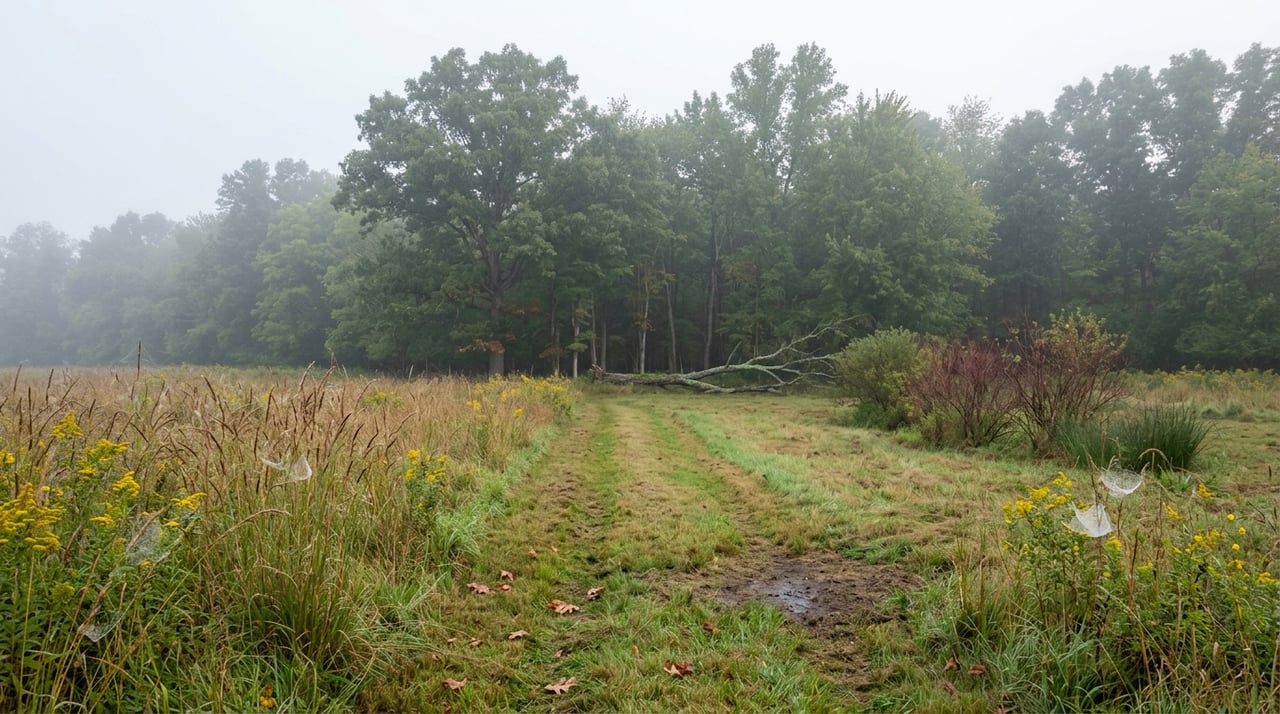
Ten acres bordering a vineyard outside Paw Paw shows up in the listing at a price that looks almost too good next to comparable unencumbered lots nearby. Before writing an offer on land like that, it pays to ask why. Sometimes the answer has nothing to do with the soil, the road frontage, or the view of the vines next door. Sometimes the answer is that someone already traded away the right to build anything else on it, and the discount you are looking at is the price of that trade, not a bargain.
Paw Paw sits inside Michigan's Grape Country, ringed by working vineyards like St. Julian Winery, Warner Vineyards, Cody Kresta Vineyard and Winery, and Lawton Ridge Winery, with Round Barn Winery & Estate a short drive south. That proximity is part of the appeal for buyers who want a rural lifestyle with a tasting room a few minutes away. It is also the reason two pieces of Michigan law quietly follow certain parcels around, and neither one shows up on the listing sheet.
Michigan's Right to Farm Act allows a seller of property within one mile of a farm or farm operation to voluntarily disclose that fact using specific language written into state law. The disclosure states that the buyer's property lies within a mile of a farm, that the farm may generate ordinary noise, dust, and odors, and that those conditions are protected under the Right to Farm Act.
Notice the word voluntarily. A seller can offer this disclosure. Nothing in the statute compels one to. If you are looking at acreage near any of Paw Paw's vineyards and nobody hands you that notice, it does not mean you are in the clear. It means you have to ask.
The reason the answer matters more than it might sound is what the Right to Farm Act actually protects. A farm operation that follows Generally Accepted Agricultural and Management Practices, the GAAMPs set by the Michigan Commission of Agriculture and Rural Development, cannot be found a nuisance over the noise, dust, or odor that comes with normal operations. That protection has teeth. In a 2022 ruling, the Michigan Supreme Court confirmed that a farm operation which successfully defends against a nuisance claim is entitled to recover its attorney fees from the person who sued, and a court has no discretion to deny that award. Buy next to a working vineyard, and you are not just accepting some tractor noise during harvest. You are accepting that the law sides with the vineyard if you ever try to make it stop.
The second layer runs deeper than noise complaints, and it is the one that actually explains cheap acreage. Michigan's Farmland and Open Space Preservation Program, commonly called PA 116, lets a landowner sign a Farmland Development Rights Agreement with the state. In exchange for keeping the land in agricultural use for a minimum of 10 years, up to 90, the owner gets an income tax credit and an exemption from special assessments for sewer, water, and non-farm drainage.
The tradeoff is real. During the life of that agreement, you cannot put up a structure on the property unless it is tied to the farm operation. When the land sells, the agreement does not disappear. It has to transfer to the new owner using a form filed with the Michigan Department of Agriculture and Rural Development, or it has to be terminated, and terminating one is not free. Michigan law requires repayment of the last seven years of tax credits plus 6 percent interest, and that repayment becomes a lien on the property until it is paid.
Paw Paw Township itself is one of the participating townships under Van Buren County's own farmland preservation ordinance, alongside Almena, Antwerp, Decatur, Hamilton, Lawrence, Pine Grove, Porter, South Haven, and Waverly townships. That means acreage inside Paw Paw Township is exactly the kind of parcel where a PA 116 agreement, or a permanent county-purchased conservation easement, is a live possibility rather than a hypothetical one.
In April 2026, the Michigan Department of Agriculture and Rural Development awarded Van Buren County $312,600 to permanently purchase the development rights on a 219-acre farm in Hamilton Township, owned by sixth-generation farmer Carl Druskovich and worked with the next generation already involved, growing corn, strawberries, and gladiolas. The county's own community services director put a number on the tradeoff: on the open market, the farm would likely bring around $438,000. The gap between that figure and the $312,600 paid for the development rights is roughly the price of permanently forfeiting the ability to build anything non-agricultural on the land.
| Estimated value | |
|---|---|
| Open market value (unrestricted) | ~$438,000 |
| Value of development rights purchased | $312,600 |
That is not a one-time anomaly. It is the same math that applies, in smaller form, to any Paw Paw-area parcel already enrolled in PA 116 or a county conservation easement. The land is not undervalued. It is valued correctly for what it is legally allowed to become, which in some cases is nothing more than what it already is.
A handful of questions, asked before the purchase agreement instead of after, can save a buyer from an unpleasant title search surprise:
None of this shows up in a standard listing description. It surfaces in a title search, a call to the township, or a records request to MDARD, and by the time most buyers think to ask, they are already past their inspection contingency.
Does every property near a Paw Paw vineyard carry these restrictions? No. Right to Farm protections apply to any land within a mile of a qualifying farm operation, restriction or not. PA 116 agreements and conservation easements only apply to specific parcels where an owner has signed one, and that has to be confirmed through the county or the title company.
Can a PA 116 agreement be removed after purchase? Yes, but not without cost. Termination requires repaying the last seven years of tax credits plus 6 percent interest, and certain releases require approval tied to specific circumstances like death, disability, or a small parcel with a pre-existing structure.
If I do not plan to farm, can I still buy PA 116 land? Yes, but the restrictions transfer with the property unless the agreement is formally released. New owners are required to sign a transfer declaration with MDARD as part of the sale, so this needs to be part of the closing paperwork, not an afterthought.
If you are circling a parcel in Paw Paw wine country and want someone to pull the PA 116 and Right to Farm history before you write an offer, Atwood Properties Group can help you check the paperwork that title companies sometimes miss until it is too late to walk away cleanly. And if you are weighing what your current property is worth against a move into Van Buren County's wine country, get your instant home valuation to see where you stand before you start looking.
Stay up to date on the latest real estate trends.
Partner with Atwood Properties Group for expert guidance in buying, selling, renting, or investing. Honest advice, seamless service, and local expertise you can trust every step.