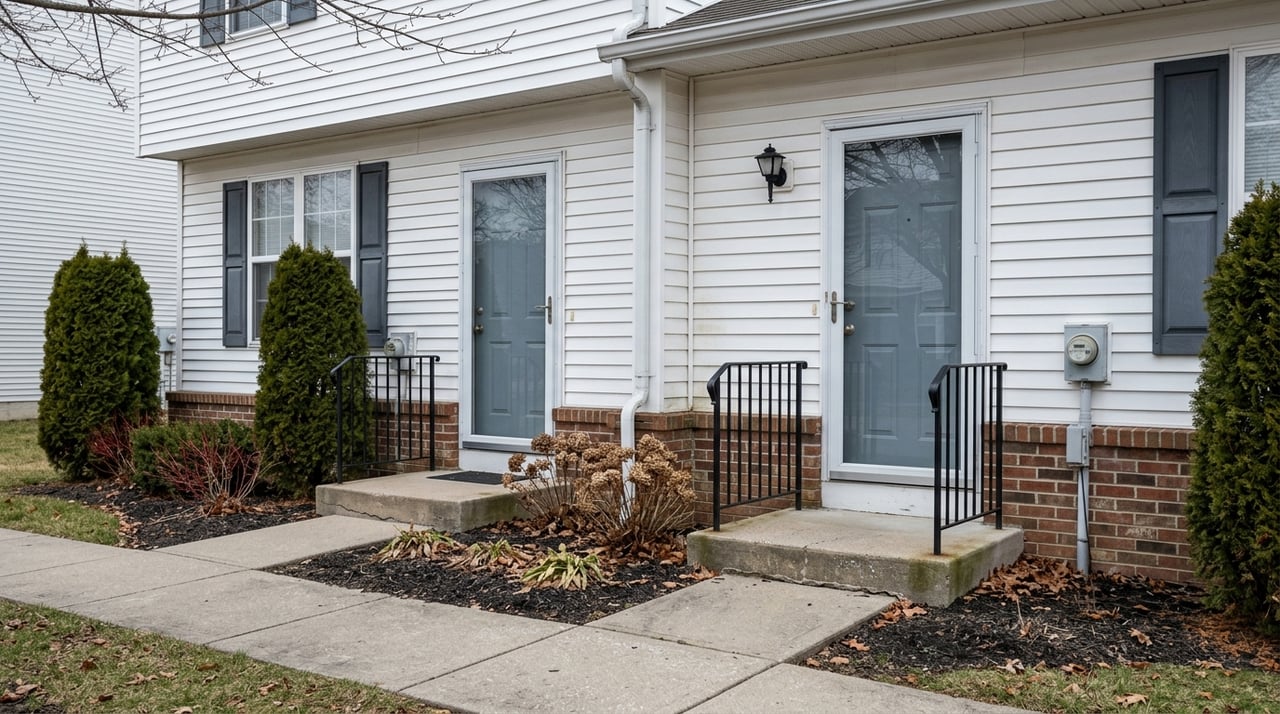
Portage Condo And Townhome Living Guide
June 25, 2026
June 25, 2026
Wondering if a condo or townhome in Portage will actually save you money and simplify your life? The answer is not always as obvious as buyers expect. In Portage, attached-home living can be a smart fit, but the right choice usually comes down to price, rules, maintenance, and association quality as much as the floor plan itself. If you want a clear, practical look at what to expect before you tour, this guide will help you sort through the details. Let’s dive in.
If you assume condos and townhomes are always the low-cost way into the market, Portage may surprise you. Over the three months ending in May 2026, Redfin reported a Portage median sale price of $319,759, while Realtor.com showed a median listing price of $315,000.
At the same time, Redfin’s Portage condo page showed 24 condos for sale at a median listing price of $335,000. That means attached homes in Portage often compete with the broader market instead of sitting far below it on price.
Current listing examples also show a wide spread. Zillow and Realtor.com examples range from roughly the high $100,000s to nearly $700,000, with many listings clustered between about $190,000 and $350,000, plus another group of new-construction units from around $440,000 to $675,000.
The big takeaway is simple: Portage condos and townhomes span entry-level, mid-market, and move-up price points. You will want to compare each property on age, size, updates, and association structure instead of assuming the label tells you the value.
In Portage, the words “condo” and “townhome” do not always tell you the legal setup of the property. A home may look like a townhouse, but legally still be part of a condominium project.
Michigan’s condominium handbook makes this especially important. A site condominium is still a condominium project, even when the homes look more like detached single-family properties than attached units.
That is why you should not rely only on online search filters or marketing descriptions. The master deed and bylaws matter more than the label because they tell you what you own, what is shared, and what rules apply.
The legal structure affects more than paperwork. It can shape your monthly dues, your maintenance responsibilities, your voting rights, and whether you need approval for certain changes.
It also affects how you should evaluate a property before making an offer. Two homes with similar layouts may come with very different ownership responsibilities depending on how the community is set up.
Michigan condo co-owners own their unit exclusively, but they also share the common elements. Common elements can include hallways, lobbies, building exteriors, lawns, private roads, recreation facilities, and some major building systems.
The state handbook also notes that shared systems may include items like the roof, pipes, wires, and even the furnace in some projects. That is an important reminder that low-maintenance living does not mean zero maintenance.
Your ownership percentage matters too. It can affect your monthly maintenance fees, special assessments, and voting power within the association.
Not every Portage community is structured the same way. In one development, the association may handle much of the exterior upkeep. In another, your personal responsibilities may be broader.
That is why buyers should ask very specific questions about what the dues cover and what costs remain separate. The answer will come from the governing documents, not from assumptions.
Monthly dues are a major part of condo and townhome living in Portage. They may support upkeep of common areas, exterior maintenance, private roads, recreation areas, and shared utilities or systems, depending on the community.
Michigan requires associations to maintain a reserve fund for major repairs and replacement of common elements. The handbook states that the minimum reserve is 10% of the annual budget on a non-cumulative basis.
That reserve matters because it can affect whether a community is better prepared for future repairs. If reserves are weak, owners may be more exposed to additional assessments when larger projects come up.
A low monthly fee can look attractive at first glance. But if the association has not planned well for future expenses, that lower fee may not tell the full story.
Before you move forward, ask for reserve information, annual financial statements, and the current budget. Those documents can give you a clearer picture of how the community handles long-term maintenance.
Condo and townhome living usually comes with rule-based living. Michigan’s handbook warns that bylaws can restrict pets, rentals, outdoor displays, and similar issues.
Some repairs or modifications to your unit may also require association approval. That can affect everything from exterior changes to practical maintenance decisions, depending on the project.
Rules can change after closing too. The handbook says bylaws may be amended, so it is smart to understand both the current rules and how the association handles changes.
For many buyers, that trade-off is worth it. If you value shared exterior responsibilities and fewer yard tasks, the structure can be a good match.
If you want full control over exterior design, fewer restrictions, or a more private setup, you may want to compare attached homes carefully against single-family options in Portage.
Before you get too far into the process, document review is one of the smartest steps you can take. In Michigan, developers are required to provide key materials such as the recorded master deed, purchase agreement, escrow agreement, the condominium buyer’s handbook, and a disclosure statement.
That disclosure statement covers items such as prior experience, warranties, completion financing for items that must be built, and an itemized association budget. A purchaser may also withdraw from a signed purchase agreement without cause within nine business days after receiving all required documents.
For buyers, that creates an important window to slow down and read carefully. In a fast-moving market, that pause can help you avoid unpleasant surprises.
When you review a Portage condo or townhome, ask questions like these:
Association transparency can vary from one community to another. Michigan says associations must keep books, records, master deeds, and amendments available at reasonable hours.
The handbook also says associations with annual revenues above $20,000 must have their books and financial statements independently audited or reviewed unless they opt out by annual affirmative vote. At the same time, bylaws may not require minutes to be provided to co-owners.
There is also no governmental agency that regulates condo associations and management companies in Michigan. That makes your own review process especially important when you are comparing communities.
If you are narrowing down options in Portage, it is reasonable to request:
These records can tell you a lot about how a community is run and whether the lifestyle matches what you want.
For the right buyer, attached-home living in Portage offers real lifestyle appeal. The city oversees 20 park sites, and Portage Creek Bicentennial Park spans more than 200 acres with a 3.5-mile multi-use trail.
Winter trail segments are plowed, which can make year-round outdoor access more practical. The Portage Zhang Farmers Market also features more than 35 vendors, adding another everyday convenience for residents who value easy local outings.
That mix can make condos and townhomes attractive for downsizers, first-time buyers, and busy professionals who want lower exterior upkeep without giving up access to parks and local amenities. In some cases, attached homes also show up in established in-town areas as well as newer developments.
Redfin flags Millwood and South Westnedge as popular condo neighborhoods in Portage. That does not mean every listing there will fit your needs, but it does suggest where attached-home inventory tends to show up.
If location matters as much as maintenance style, it helps to compare communities by access, layout, and overall feel, not just by list price.
In Portage, condo or townhome living often works best when you value predictable upkeep, shared exterior responsibilities, and neighborhood convenience more than a private yard and full control over the property.
Because pricing overlaps with the city’s broader median sale and listing ranges, the decision is often about routine and ownership style instead of just budget. You are not only choosing a home. You are choosing a framework for how maintenance, rules, and shared costs will work after closing.
That is why a careful review upfront matters so much. When you understand the documents, dues, and responsibilities, you can make a choice that feels practical now and sustainable later.
If you are weighing condos, townhomes, or site condos in Portage, having local guidance can make the process much simpler. The team at Adam Atwood can help you compare options, understand the structure behind the listing, and find a property that fits the way you want to live.
Stay up to date on the latest real estate trends.
Partner with Atwood Properties Group for expert guidance in buying, selling, renting, or investing. Honest advice, seamless service, and local expertise you can trust every step.